Streets, utilities, stormwater, and the funding to pay for them - engineering for villages, towns, and cities that measure projects in budgets, not billboards.
Most Wisconsin communities do not keep an engineer on staff - they keep an engineer on call. Done right, that role is an extension of village and town staff: at the board meeting, on the job site, and on the phone when a culvert fails on a Friday afternoon. Since 2010, Lynch & Associates has filled that role across southeastern Wisconsin: as retained engineer for towns like the Town of Linn, as the long-term engineering partner behind a decade of work in the Village of East Troy, and as the project engineer communities hire street by street, pipe by pipe. Firm-wide, Lynch & Associates has completed more than 3,700 projects since 2010 - and municipal infrastructure has been core to that work from the beginning.
The scope covers what public works actually needs: street reconstruction and pavement rehabilitation, water main and sanitary sewer replacement, stormwater and drainage systems, culverts and small structures, development review, special assessment support, and construction management with our own inspectors. Led by co-founder Tim Lynch, P.E. - nearly 30 years serving municipalities and utility districts, from sewer studies and lift stations to expert witness testimony.
Funding is often as important as the design. We administer grants and help communities position projects for WDNR programs, WIFIA, and USDA Rural Development - the East Troy dam removal moved forward because the grant administration did. When a project must fit a levy, we phase it to fit: the Town of Linn's drainage program advances a budget at a time, and never stalls.
A long-term municipal engineering relationship is less a contract than a calendar. Across a year it looks like this: sitting in board and committee meetings so the engineering answer arrives before the vote rather than after it, reviewing developer submittals against the community's own ordinances, building the cost estimates a capital improvement plan and a levy depend on, and taking the call when a storm finds the one culvert nobody was worried about.
In between, the work is ordinary and continuous - answering resident questions about drainage and driveways, tracking which funding cycles a project could realistically fit, writing plans and specifications once it is funded, running the bidding, and putting our own inspectors on site while it is built.
What a community gets from the arrangement is continuity. The engineer who wrote the sewer study is the one who remembers why a main was left in place, and the one who can tell a new board member what the last three budgets already bought. That institutional memory is most of the value, and it is the part a community cannot rebuild by hiring a different firm each time.
Some communities keep Lynch & Associates on as their engineer of record. Others call project by project - a street this year, a lift station in two years - and we hold the history in between. Both arrangements work; what matters is that someone keeps the file.
Four examples of what communities hire us for - follow any of them for the full story.
More municipal work: Clayton & Bellview Avenues, STH 20 watermain relay, Country Bliss storm sewer, Piper Road, Marquette Avenue, and the New Berlin Farmers Market. Working on a lake or a stream? See shoreline and stream restoration engineering.
A municipal project is only as real as its funding source. These are the programs our clients use - and the paperwork we carry alongside the design.
Federal-aid street and highway funding administered through WisDOT, delivered under a State/Municipal Agreement with WisDOT oversight. We design to state standards and carry the review process - the STP-Urban reconstruction of Goold Street in Racine is a working example, delivered on time under exactly that structure.
County-administered reimbursement for local road and bridge improvements, awarded on a cycle. LRIP rewards communities that are ready when applications open, so the practical work is having a scoped, estimated project on the shelf before the call goes out.
Where a district can carry the cost, TID turns development activity into public improvements. The Main Street sidewalk project in East Troy was funded through the Village's TID program - infrastructure paid for by the growth it supports.
Dam removal, stream restoration, and water quality work move on state environmental grants. The East Troy dam removal advanced because the grant administration held up its end - applications, reporting, reimbursement requests, and compliance documentation through closeout.
For water and sewer work too large for an annual budget, low-interest federal loan and rural utility programs spread the cost across the life of the asset. We help communities position projects to qualify and assemble what the programs ask for.
Not every project gets outside money. When the levy is the source, phasing is the strategy - the Town of Linn's drainage program advances a budget at a time and never stalls. We prepare the assessment exhibits and sit in the hearings where those numbers get explained to residents.
Not sure which program fits? Bring us the project and we will tell you honestly whether it is fundable, and what it would take to be ready for the next cycle. Or start with our full Wisconsin municipal grant and funding directory - every program, its deadlines, and the awards our clients have won.
Our municipal client list is the honest resume: the Village of East Troy, Village of North Prairie, Town of East Troy, Town of Linn, Town of Eagle, Town of Delavan, Town of Mukwonago, Town of Palmyra, Town of Burlington, Town of Spring Prairie, and the City of Franklin, along with county-level work for Dodge County on the Gold Star Memorial Trail. Most sit within an hour of our Burlington and New Berlin offices - and for WisDOT-funded municipal projects, we work statewide.
Long-term municipal engineering services under one standing role - an extension of your staff. We attend meetings, review developments, answer resident questions, and keep the capital plan honest. The Town of Linn model.
A defined scope: one street, one watermain, one culvert - designed, bid, and inspected without a long-term commitment.
STP, LRIP, TID, WDNR grants, WIFIA, USDA Rural Development - we identify the program, write the application support, administer the award, and document compliance through closeout.
Questions communities ask us - special assessments, what reconstruction is like for residents, funding sources - are answered on the municipal engineering page.
Usually because the study identifies the problem without resolving constructability, easements, downstream impacts, permitting, cost, or a realistic order of work. A recommendation that cannot be built is not a solution.
No. A larger culvert can relieve one restriction while increasing flows downstream or simply exposing the next bottleneck. The drainage system above and below the crossing has to be understood first.
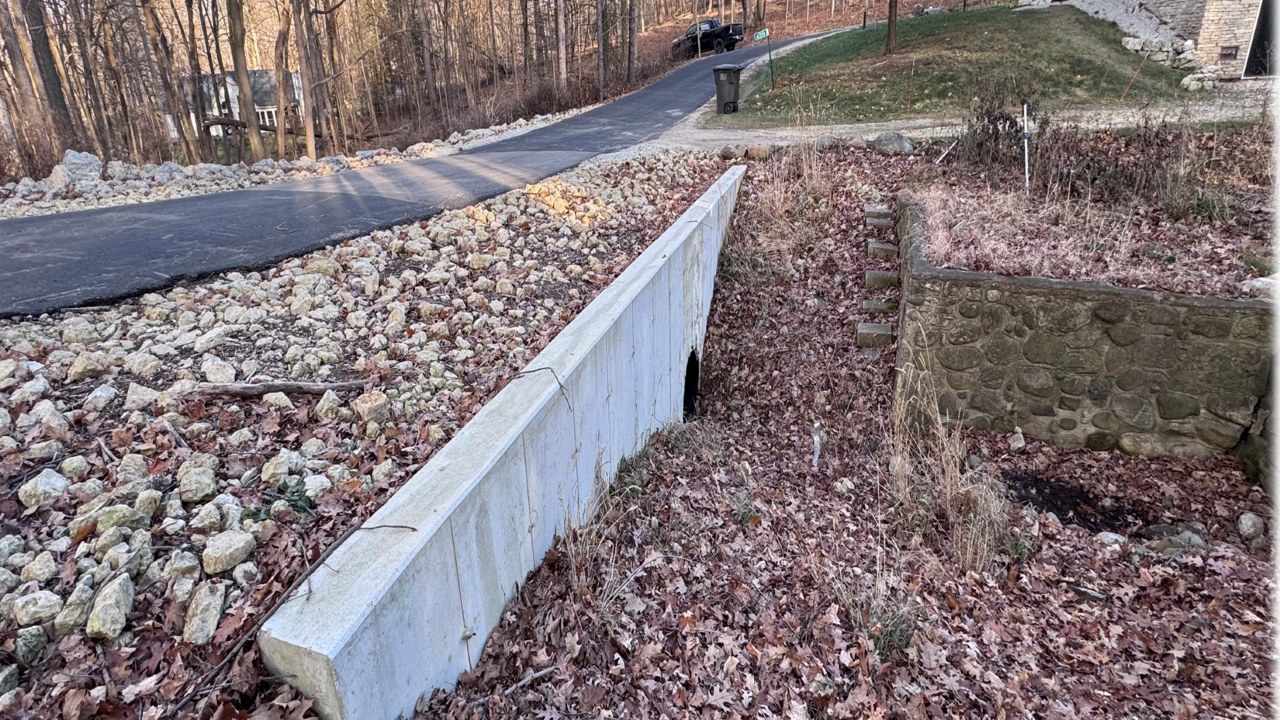
Often, yes. Where the system allows it, culvert replacement, field inlets, check dams, and conveyance work can be sequenced across several budget years. In the Maple Hills subdivision in the Town of Linn, we built a phased program the Town could fund a year at a time.
Most construction projects disturbing one acre or more require construction-site stormwater permit coverage from the Wisconsin DNR. Additional permitting can apply depending on waterways, wetlands, and site conditions.
Yes. Culverts, inlets, outlets, and control structures need inspection and cleaning to keep working as designed. The plan should say what gets inspected, how often, who is responsible, and how access is maintained.